There are 5.66 billion social media users worldwide in 2026, spread across more than 100 platforms (DataReportal). But not every platform deserves a spot in your client’s content strategy. This list of social media platforms ranks the top 25 by monthly active users, with MAU data, content formats, and specific marketing tips for agencies managing multiple client accounts.
The average person uses 7 to 8 social networks (DataReportal). That means your clients’ audiences aren’t on just one platform. They’re on several. Knowing which ones matter (and which ones don’t) saves your team hours of wasted effort each week. Use this social media apps list to find the right platforms for each client.
Here’s the full social media networks list, ranked:
- Facebook: 3.07 billion MAU
- WhatsApp: 2.8 billion MAU
- YouTube: 2.7 billion MAU
- Instagram: 2.4 billion MAU
- TikTok: 1.9 billion MAU
- WeChat: 1.4 billion MAU
- Telegram: 950 million MAU
- Messenger: 942 million MAU
- Snapchat: 850 million MAU
- Kuaishou: 700 million MAU
- X (Twitter): 600 million MAU
- Pinterest: 537 million MAU
- Reddit: 500 million MAU
- Quora: 400 million monthly visitors
- Threads: 300 million MAU
- LinkedIn: 310 million MAU (1 billion members)
- Viber: 260 million MAU
- Twitch: 240 million MAU
- Discord: 200 million MAU
- LINE: 196 million MAU
- Tumblr: 135 million monthly visitors
- Bluesky: 30 million users
- Lemon8: 25 million MAU
- BeReal: 22 million MAU
- Mastodon: 1 million MAU
Sources: Statista, DataReportal, platform earnings reports (2025-2026).
Every Social Media Platform at a Glance
Facebook leads with 3.07 billion monthly active users, but the right platform for your clients depends on their audience and content type. This comparison table covers all 25 social media sites on this list, ranked by MAU, with the platform type, best marketing use case, supported content formats, and whether RecurPost supports scheduling for it.
| Platform | MAU | Type | Best For | Content Formats | RecurPost Support |
|---|---|---|---|---|---|
| 3.07B | Social network | Local businesses, community building | Feed posts, Stories, Reels, Groups, Live | Yes | |
| 2.8B | Messaging | Customer support, notifications | Text, media messages, Channels, Status | No | |
| YouTube | 2.7B | Video | Long-form education, brand storytelling | Long video, Shorts, Live, Community posts | Yes |
| 2.4B | Visual social | DTC brands, lifestyle, ecommerce | Feed, Stories, Reels, Carousels, Live | Yes | |
| TikTok | 1.9B | Short-form video | Gen Z and Millennial reach, virality | Short video, Live, Stories, Photos | Yes |
| 1.4B | Super app | Chinese market entry | Moments, Channels, Mini Programs, Pay | No | |
| Telegram | 950M | Messaging | Crypto, tech communities, broadcasts | Channels, Groups, Bots, Stories | No |
| Messenger | 942M | Messaging | Customer service, lead gen | Text, media, chatbots, Rooms | No |
| Snapchat | 850M | Ephemeral | Gen Z, AR marketing | Snaps, Stories, Spotlight, AR Lenses | No |
| Kuaishou | 700M | Short-form video | Chinese market (tier 2-3 cities) | Short video, Live, ecommerce | No |
| X (Twitter) | 600M | Microblogging | News, thought leadership, B2B | Text posts, images, video, Spaces | Yes |
| 537M | Visual discovery | Ecommerce, home, food, fashion | Pins, Idea Pins, Shopping Pins | Yes | |
| 500M | Forum/community | Niche communities, brand research | Text posts, images, video, AMAs | No | |
| Quora | 400M visitors | Q&A | Thought leadership, SEO | Questions, answers, Spaces | No |
| Threads | 300M | Microblogging | Brand voice, text-based content | Text posts, images, carousels | Yes |
| 310M MAU (1B members) | Professional | B2B marketing, recruiting | Articles, posts, carousels, newsletters, Live | Yes | |
| Viber | 260M | Messaging | Eastern European and Asian markets | Messages, Communities, Channels | No |
| Twitch | 240M | Live streaming | Gaming, live events | Live streams, clips, VODs | No |
| Discord | 200M | Community | Gaming, tech, education communities | Text/voice channels, forums, stages | No |
| LINE | 196M | Messaging/social | Japanese and Southeast Asian markets | Messages, Timeline, VOOM, Stickers | No |
| Tumblr | 135M visitors | Microblogging | Creative communities, fandom | Text, images, GIFs, audio, video | No |
| Bluesky | 30M | Decentralized social | Tech-savvy, Twitter alternatives | Text posts, images | Yes |
| Lemon8 | 25M | Lifestyle | Beauty, fashion, travel | Photo posts, video, guides | No |
| BeReal | 22M | Ephemeral | Authenticity-focused Gen Z | Dual-camera photos | No |
| Mastodon | 1M | Decentralized social | Privacy-focused, open-source community | Text posts (toots), images, polls | No |
Social Media Giants (1 Billion+ Users)
Six platforms have crossed the 1 billion monthly active user mark, and five of them should be part of most agency content strategies. WeChat is the exception (unless your clients target the Chinese market). These platforms offer the broadest reach and the most mature advertising tools.
Facebook (3.07 Billion MAU)

Facebook is the largest social media platform in the world and the most important one for local business clients. With 3.07 billion MAU (Statista), it reaches 34.1% of the global adult population.
71% of U.S. adults use Facebook, with women (78%) outpacing men (63%) on the platform (Pew Research). The largest age group is 25-34, making it strong for reaching working professionals and parents.
Content that works: Feed posts with images, Facebook Reels (Meta’s push into short-form video), and Groups for community building. Organic reach sits at 1-2% for Pages, which means paid amplification matters for most client strategies.
Agency tip: Facebook’s local ad targeting is unmatched. For clients with physical locations (restaurants, gyms, dental offices), pair organic Group engagement with hyper-local ads. Track performance with social media statistics benchmarks to show clients what “normal” looks like on the platform.
YouTube (2.7 Billion MAU)

YouTube is the world’s second-largest search engine and the top platform for long-form video marketing. Its 2.7 billion MAU (Statista) make it the most-used platform among U.S. adults, with 84% reporting regular use (Pew Research).
YouTube advertising reaches 30.9% of all people on Earth. YouTube Shorts now competes directly with TikTok and Instagram Reels, pulling in over 70 billion daily views globally.
Content that works: Tutorials, product reviews, behind-the-scenes content, and YouTube Shorts for discoverability. Long videos (8-15 minutes) perform best for ad revenue and watch time.
Agency tip: YouTube videos have the longest content shelf life of any platform. A well-optimized video can drive traffic for years. For clients with educational or how-to content, YouTube should be a priority over platforms where content disappears in 24 hours.
WhatsApp (2.8 Billion MAU)

WhatsApp is the most-used messaging app globally, with 2.8 billion MAU (DataReportal). It dominates in India, Brazil, Indonesia, and across Europe and Latin America.
The platform isn’t a traditional social media channel for content marketing. But WhatsApp Business and WhatsApp Channels have turned it into a viable customer communication tool. Brands use it for order confirmations, appointment reminders, and direct customer support.
Content that works: Broadcast lists for announcements, WhatsApp Channels for one-to-many updates, and Business API for automated customer service flows.
Agency tip: If your clients sell in markets outside North America (especially India, Brazil, or Western Europe), WhatsApp is where their customers expect to communicate. It’s not a scheduling platform. It’s a conversion and retention channel.
Instagram (2.4 Billion MAU)

Instagram is the top platform for DTC brands, ecommerce, and lifestyle marketing. With 2.4 billion MAU (Statista), it’s Meta’s fastest-growing property, up 10% year-over-year.
61% of Instagram users discover new products on the platform, and 72% say they’ve made purchase decisions based on something they saw there. Among 18-29 year-olds in the U.S., 80% use Instagram. That drops to 19% for those 65 and older (Pew Research).
Content that works: Reels (the algorithm’s current favorite), carousels for education and engagement, Stories for daily touchpoints, and Shopping tags for ecommerce clients. Check out this Instagram Reels guide for format-specific strategies.
Agency tip: Instagram rewards consistency. Clients who post 4-5 Reels per week see measurably better reach than those posting 1-2. Use a social media content calendar to batch-plan content across client accounts.
TikTok (1.9 Billion MAU)

TikTok is the fastest-growing major platform and the leader in short-form video engagement. Its 1.9 billion MAU (Statista) grew 17.6% year-over-year, the highest growth rate among platforms with over 1 billion users.
Users spend an average of 58 minutes per day on TikTok. That’s more than any other social platform. Women (42%) use it more than men (30%) in the U.S. (Pew Research), and it skews heavily toward users under 30.
Content that works: Short videos (15-60 seconds), trending audio, duets, stitches, and TikTok Shop for social commerce. Authenticity beats production quality here.
Agency tip: TikTok’s algorithm gives new accounts a fair shot at reach, making it one of the best platforms for client brand launches. Focus on trending formats and sounds rather than polished production. For clients building a presence, learn how to get verified on TikTok to boost credibility.
WeChat (1.4 Billion MAU)

WeChat is China’s dominant super app, combining messaging, social media, payments, and mini-programs into a single platform. Its 1.4 billion MAU are overwhelmingly based in mainland China.
For agencies outside China, WeChat is relevant only if clients target Chinese consumers or tourists. The platform’s “Moments” feature functions like a Facebook News Feed, while WeChat Channels compete with TikTok’s Chinese counterpart Douyin.
Content that works: Moments posts for brand awareness, Official Accounts for content distribution, and Mini Programs for ecommerce and services.
Agency tip: WeChat requires a Chinese business license for Official Accounts. If your clients target Chinese markets, partner with a local agency for account setup and content localization. The investment is worth it: WeChat Pay alone processes over 1 billion transactions daily.
Major Platforms (100 Million to 999 Million Users)
Nine platforms sit in the 100 million to 999 million user range, each serving a distinct audience and content style. These platforms often deliver higher engagement rates than the giants because their users are more focused. A Reddit comment thread or a LinkedIn carousel often outperforms a Facebook post in terms of meaningful interaction.
Telegram (950 Million MAU)

Telegram is the fastest-growing messaging platform, hitting 950 million MAU in 2025 and approaching the 1 billion mark. It’s popular with crypto communities, tech enthusiasts, and users in regions where WhatsApp or other messengers face restrictions.
Telegram Channels let brands broadcast to unlimited subscribers. Groups can host up to 200,000 members. The platform recently added Stories and post reactions, pushing it closer to a social media platform than a pure messenger.
Agency tip: Telegram works best for clients in crypto, tech, finance, and news media. If your client has a community that values privacy and real-time updates, Telegram Channels are a strong fit. It’s not ideal for visual brands or ecommerce.
Snapchat (850 Million MAU)

Snapchat reaches 850 million MAU globally, with its strongest user base among 13-24 year-olds. In the U.S., 48% of 18-29 year-olds use Snapchat (Pew Research).
The platform’s AR Lenses and Filters give brands tools no other social media app offers. Snapchat Spotlight (its TikTok competitor) has gained traction, and the Snap Map feature is valuable for location-based marketing.
Content that works: Stories, Spotlight videos, branded AR Lenses, and Snap Ads between Stories.
Agency tip: Snapchat is essential for clients targeting Gen Z consumers (fashion, food, entertainment). AR Lenses can generate millions of impressions. The cost of creating a custom Lens has dropped significantly, making it accessible even for smaller brands.
X / Twitter (600 Million MAU)
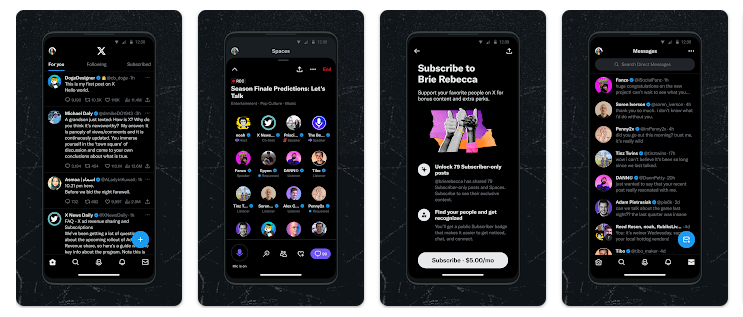
X (formerly Twitter) claims 600 million MAU, though third-party estimates vary. The platform remains the go-to for real-time news, public conversation, and customer service. 57% of X users get news on the platform regularly.
The user base skews male (63% in the U.S.) and tends toward higher income and education levels. X Premium users can post up to 25,000 characters, turning the platform into a long-form content channel for paying subscribers.
Content that works: Text posts, threads, images, and X Spaces for audio conversations. Video is growing but text still drives the most engagement.
Agency tip: X is strongest for B2B clients, media companies, and personal brands. For agencies, it’s also a real-time customer service channel. Monitor client mentions daily. A fast public reply to a complaint can turn a negative into a win.
Reddit (500 Million MAU)

Reddit reaches 500 million MAU across 100,000+ active communities (subreddits). It’s the platform where purchase decisions get made: users research products, compare options, and share honest reviews in subreddits dedicated to nearly every niche imaginable.
Men use Reddit more than women (29% vs. 23% in the U.S.), and the platform skews toward 18-49 year-olds (Pew Research). Reddit’s audience is highly skeptical of traditional marketing. Authenticity is non-negotiable here.
Content that works: Text posts, AMAs (Ask Me Anything), comment engagement, and Reddit Ads for targeting specific subreddits.
Agency tip: Reddit is a research goldmine for agencies. Before building a social strategy for a new client, search their industry subreddits. You’ll find exactly what their target audience cares about, complains about, and recommends. That insight informs content across every other platform.
Pinterest (537 Million MAU)

Pinterest has 537 million MAU and is unique among social media apps because users come with purchase intent. 85% of weekly Pinners have bought something based on Pins they saw. The platform is a visual search engine more than a social network.
Women make up roughly 60% of Pinterest’s user base. The strongest verticals are home decor, food and recipes, fashion, beauty, weddings, and DIY.
Content that works: Pins with vertical images (2:3 ratio), Idea Pins for step-by-step content, and Shopping Pins with direct product links.
Agency tip: Pinterest content has a 3-6 month shelf life compared to hours on most platforms. For ecommerce clients in home, food, or fashion, Pinterest drives lower-funnel traffic. Optimize Pin descriptions with keywords the same way you would for SEO.
LinkedIn (1 Billion Members, ~310 Million MAU)

LinkedIn has crossed 1 billion members globally, with an estimated 310 million MAU. It generates 80% of B2B social media leads (LinkedIn Marketing Solutions), making it the single most important platform for B2B agency clients.
The platform’s content algorithm heavily favors document/carousel posts and newsletters. LinkedIn articles rank in Google search results, giving them SEO value beyond the platform itself.
Content that works: Carousel/document posts (PDF uploads), text posts with hooks, LinkedIn newsletters, articles, and Live video.
Agency tip: LinkedIn’s engagement rate per impression is higher than any other major platform for B2B content (Sprout Social). For B2B clients, prioritize LinkedIn over everything else. Post 3-5 times per week. Use carousels for educational content and native video for thought leadership.
Threads (300 Million MAU)
Threads, Meta’s X competitor, hit 300 million MAU within its first 18 months. It integrates directly with Instagram, so brands already active on Meta’s platforms can start posting without creating a new account.
The platform favors text-based conversation. There are no ads yet, which means organic reach is strong. Early adopters are seeing engagement rates that echo early Instagram.
Content that works: Text posts, conversation starters, memes, behind-the-scenes content, and carousels (recently added).
Agency tip: Threads is worth testing for clients already active on Instagram. The cross-posting integration saves time, and the current lack of ads means higher organic visibility. It’s a low-effort addition rather than a primary platform for most agency clients right now.
Quora (400 Million Monthly Visitors)

Quora attracts 400 million monthly visitors looking for answers to specific questions. The platform’s content ranks well in Google search results, giving answers long-term visibility beyond Quora itself.
The user base skews toward professionals, researchers, and students. Quora Spaces (topic-based communities) and the Partner Program offer opportunities for content creators.
Content that works: Detailed, authoritative answers to industry-specific questions. Answers that include data, personal experience, and clear structure perform best.
Agency tip: Quora is an underused content distribution channel. For clients in consulting, SaaS, or professional services, answering niche questions on Quora builds authority and drives referral traffic. One well-written answer can generate steady traffic for months.
Discord (200 Million MAU)

Discord has 200 million MAU, expanding well beyond its gaming roots into education, crypto, music, and brand communities. Servers function like private communities with text channels, voice channels, and forums.
The user base is heavily male (65%) and skews toward 18-34. Brands like Nike, Adidas, and Chipotle have launched Discord servers for customer engagement and exclusive drops.
Content that works: Community management, real-time voice chats, AMAs, exclusive content drops, and bot-powered engagement.
Agency tip: Discord works for clients building loyal communities (gaming, tech, web3, education). It’s not a broadcast channel. Brands that succeed on Discord invest in daily community management and give members genuine value for joining.
Emerging and Niche Platforms Worth Watching
Six platforms are gaining traction in specific niches, and agencies with the right clients should pay attention. None of these are must-haves for every client. But each fills a gap that the major platforms don’t.
Bluesky
Bluesky is a decentralized social platform built on the AT Protocol, created by Twitter co-founder Jack Dorsey’s team. It has over 30 million registered users as of early 2026.
The platform looks and feels like early Twitter: chronological feeds, text-first posts, and a developer-friendly API. Its decentralized architecture means users can move their accounts between servers. The audience is heavily tech-focused, with journalists, developers, and early adopters making up the core user base.
Agency tip: Bluesky matters for clients in tech, media, and journalism. For most other verticals, it’s too small to justify dedicated resources. RecurPost already supports Bluesky scheduling if you want to cross-post without extra effort.
Mastodon
Mastodon is the original decentralized social network, running on the ActivityPub protocol. It has about 1 million monthly active users spread across thousands of independently operated servers (instances).
The platform gained attention during Twitter’s ownership transition but has struggled to retain mainstream users. Its federated structure appeals to privacy-focused and open-source communities.
Agency tip: Mastodon is not a viable marketing channel for most agency clients. The audience is too small and too fragmented across servers. Keep it on your radar for clients in open-source tech or digital rights, but don’t invest resources here.
Lemon8
Lemon8 is ByteDance’s lifestyle platform (the same company behind TikTok). It has roughly 25 million MAU globally and is growing fastest in Southeast Asia and the U.S.
Think of it as Instagram meets Pinterest: photo-heavy posts with editorial-quality layouts, focused on beauty, fashion, travel, and food. The platform rewards high-quality photography and detailed captions over short-form video.
Agency tip: Lemon8 is worth watching for beauty, fashion, and lifestyle clients who want early-mover advantage. The audience is small but highly engaged. If your client’s content is already visually strong from Instagram, repurposing it to Lemon8 is low effort.
Twitch
Twitch is the dominant live-streaming platform with 240 million MAU and 35 million daily active users. Originally gaming-focused, it now covers cooking, music, talk shows, and “Just Chatting” content.
65% of users are male. The platform’s revenue model centers on subscriptions, bits (virtual currency), and advertising. Average concurrent viewership sits around 2.5 million.
Agency tip: Twitch works for clients in gaming, entertainment, and lifestyle brands targeting 18-34 males. Sponsoring streamers delivers more authentic reach than traditional ads. For non-gaming clients, Twitch is rarely worth the investment.
Tumblr

Tumblr attracts 135 million monthly visitors, down from its peak but still active in creative communities. Fandoms, artists, writers, and alternative culture communities keep the platform alive.
The platform supports text, images, GIFs, audio, and video in a blog-like format. Its audience skews young and creative, with strong communities around TV shows, anime, art, and LGBTQ+ topics.
Agency tip: Tumblr is niche but powerful for entertainment, publishing, and creative brand clients. If your client has a fandom or creative community, Tumblr is where those conversations happen organically. For most B2B or ecommerce clients, skip it.
BeReal
BeReal has 22 million MAU, down from its 73 million peak. The app sends a daily notification prompting users to share an unfiltered, dual-camera photo within 2 minutes.
The concept of authentic, unpolished content resonated strongly with Gen Z, but user retention has been a challenge. BeReal added features like RealMojis and BTS (behind-the-scenes) to boost engagement.
Agency tip: BeReal is experimental territory. A few brands (Chipotle, e.l.f. Cosmetics) have used it for behind-the-scenes content, but there’s no advertising platform and limited brand tools. Only recommend it for clients who want to project radical authenticity to Gen Z audiences.
Social Networking Sites vs Social Media Platforms
Social networking sites prioritize connections between people, while social media platforms prioritize content distribution, and the distinction changes how you market on each. Understanding the difference between these types of digital media helps agencies build strategies that match how each platform actually works.
Social networking sites are built around relationships. LinkedIn connects professionals. Discord connects communities around shared interests. Facebook Groups connect people with common identities or goals. The value comes from who you know and who you interact with.
Social media platforms are built around content. TikTok surfaces videos from creators you’ve never heard of based on your interests. Instagram’s Explore page works the same way. YouTube recommends videos by topic, not by connection. The value comes from what you watch, like, and share.
Most platforms are hybrids. Here are the main types of social networking and media platforms, and which direction they lean:
| Platform | Category | Primary Function |
|---|---|---|
| Networking | Professional connections, B2B relationships | |
| Discord | Networking | Community servers, group conversations |
| Facebook Groups | Networking | Shared-interest communities |
| Media | Visual content distribution | |
| TikTok | Media | Short-form video discovery |
| YouTube | Media | Video content consumption |
| X (Twitter) | Hybrid | News distribution + public conversation |
| Threads | Hybrid | Text content + conversation |
| Facebook (Pages/Feed) | Hybrid | Content distribution + social connections |
| Hybrid | Content voting + community discussion |
Why this matters for agencies: On networking platforms, your posting strategy should focus on building relationships. Start conversations. Reply to comments. Join relevant groups. On media platforms, focus on content quality and format optimization. The algorithm does the distribution work.
The strongest agency strategies use both types. Schedule broadcast content on Instagram, TikTok, and YouTube for reach. Then build relationships on LinkedIn, Facebook Groups, and Discord for loyalty and retention.
How to Choose the Right Platforms for Your Clients
Most agencies get better results from 3-5 well-managed platforms than from spreading thin across 10. You don’t need to be on all social media platforms to succeed. The right mix depends on four factors: your client’s target audience, their content production capacity, their industry, and their budget for paid promotion.
Here’s a decision framework based on client type:
| Client Type | Recommended Platforms | Why |
|---|---|---|
| B2B / SaaS | LinkedIn, X, YouTube | LinkedIn drives 80% of B2B social leads. X is where industry conversations happen. YouTube builds long-term authority. |
| DTC Ecommerce | Instagram, TikTok, Pinterest | Instagram and TikTok drive product discovery. Pinterest users have purchase intent. |
| Local Business | Facebook, Google Business Profile, Instagram | Facebook’s local targeting is strongest. GBP drives Maps visibility. Instagram builds local brand awareness. |
| Real Estate | Facebook, Instagram, YouTube, LinkedIn | Check out these real estate social media posts for ready-to-use content ideas. Visual platforms sell properties. |
| Restaurant / Hospitality | Instagram, TikTok, Facebook, Google Business Profile | Visual food content thrives on IG and TikTok. GBP is critical for local search and reviews. |
| Gen Z Consumer Brand | TikTok, Instagram, Snapchat, Discord | TikTok for discovery. Instagram for community. Snapchat and Discord for engagement. |
| Creator / Personal Brand | YouTube, Instagram, TikTok, LinkedIn | YouTube for depth. Instagram and TikTok for reach. LinkedIn for professional credibility. |
| SaaS / Developer Tools | LinkedIn, X, Reddit, Discord | Reddit and Discord are where developers actually talk. LinkedIn and X build thought leadership. |
Industry-specific platform mapping:
| Industry | Primary Platforms | Secondary Platforms |
|---|---|---|
| Real Estate | Facebook, Instagram | YouTube, LinkedIn |
| Restaurants | Instagram, Google Business Profile | TikTok, Facebook |
| SaaS / B2B | LinkedIn, X | YouTube, Reddit |
| Fashion / Beauty | Instagram, TikTok | Pinterest, Lemon8 |
| Healthcare | Facebook, LinkedIn | YouTube, Instagram |
| Education | YouTube, LinkedIn | TikTok, Discord |
| Finance | LinkedIn, X | YouTube, Reddit |
Start with 3 platforms. Post consistently for 90 days. Then check best times to post on social media to optimize your schedule. Add platforms only when you’ve proven results on the first three.
The top social media marketers all follow this principle: depth beats breadth. Three platforms done well outperform ten done poorly.
Managing Multiple Social Media Platforms at Scale
Posting the same content across every platform is the fastest way to underperform on all of them. Each platform has different image ratios, character limits, hashtag strategies, and content formats. A post that works on LinkedIn (long-form, professional, document carousels) will flop on TikTok (short, casual, trending audio). And a TikTok video reposted to Pinterest with a watermark looks lazy.
For agencies managing 10, 20, or 50+ client accounts, platform-specific customization is the difference between delivering results and churning clients.
What this looks like in practice:
- Different text per platform. LinkedIn posts can run 1,300+ characters with a professional tone. X posts need to be punchy at 280 characters (or 25,000 for Premium). Instagram captions are hashtag-heavy. Each version of the same message should feel native to its platform.
- Different media specs. Instagram feed images are 1:1 or 4:5. Pinterest Pins are 2:3 vertical. YouTube thumbnails are 16:9. Facebook posts with the wrong dimensions get cropped and look unprofessional.
- Different posting frequency. TikTok rewards daily posting. LinkedIn works best at 3-5 times per week. Pinterest benefits from 5-10 Pins per day. Matching the platform’s cadence matters.
RecurPost lets agencies handle this without creating separate posts in separate tabs. You write one post and customize the text, media, and hashtags for each platform from a single composer. It supports 10 platforms (Facebook, Instagram, X, LinkedIn, Pinterest, TikTok, YouTube, Google Business Profile, Threads, and Bluesky) with platform-specific options like first comments on Facebook, Instagram, and LinkedIn, CTA buttons on Google Business Profile, and carousel/document uploads on LinkedIn.
For agencies onboarding new clients, bulk scheduling via CSV upload saves hours. Instead of manually creating 100 posts one by one, upload a spreadsheet and schedule everything at once. Pair that with the approval queue so clients can review and approve posts before they go live, and you’ve eliminated the “client didn’t approve this” problem entirely.
RecurPost’s AI-powered reports let you show clients what’s working without building manual reports. Ask the AI questions about which posts drove the most engagement, what content types perform best, and what to try next. See RecurPost pricing for plan details, or start your free trial to test it with a client account.
FAQ
How many social media platforms are there?
More than 100 social media platforms exist globally, but the top 25 account for 95%+ of all social media users. This social media sites list covers all the names of social media platforms that matter for agencies. For agencies, the top 10-15 platforms are the only ones that consistently drive measurable results for clients. The rest serve niche audiences that only matter for specific verticals.
What are the top 10 social media platforms by users?
Here are the top 10 from this social media networks list, ranked by monthly active users in 2026: 1. Facebook (3.07 billion), 2. WhatsApp (2.8 billion), 3. YouTube (2.7 billion), 4. Instagram (2.4 billion), 5. TikTok (1.9 billion), 6. WeChat (1.4 billion), 7. Telegram (950 million), 8. Messenger (942 million), 9. Snapchat (850 million), 10. Kuaishou (700 million). Source: Statista and platform reports, 2025-2026.
Which social media platform is best for business?
The best social media platform for business depends on the business type. LinkedIn generates 80% of B2B social media leads, making it the clear choice for B2B companies and professional services (LinkedIn Marketing Solutions). Instagram is strongest for DTC and ecommerce brands: 61% of users discover products there. Facebook is best for local businesses because of its local ad targeting and Groups. TikTok is the top platform for brands targeting Gen Z consumers.
What is the difference between social media and social networking?
Social media platforms (Instagram, TikTok, YouTube) broadcast content to audiences. Social networking sites (LinkedIn, Discord, Facebook Groups) build connections between people. The distinction matters for how you post on each. On media platforms, focus on content quality and algorithm optimization. On networking platforms, focus on building relationships and starting conversations.
What new social media platforms are popular in 2026?
Threads (Meta’s X competitor) is the most significant new social media app for agencies, with 300 million MAU and direct Instagram integration. Bluesky has 30 million users and is growing among tech and media professionals. Lemon8 (by ByteDance) is gaining traction in beauty, fashion, and lifestyle with 25 million MAU. Noplace is a Gen Z text-based social app that launched in mid-2024 and is still finding its audience. For most agency clients, Threads is the only new platform worth investing in right now.
How can agencies manage multiple social media platforms efficiently?
Agencies manage multiple social media platforms efficiently by using a scheduling tool that supports platform-specific customization. RecurPost lets agencies schedule across 10 platforms (Facebook, Instagram, X, LinkedIn, Pinterest, TikTok, YouTube, Google Business Profile, Threads, and Bluesky) with unique content per platform from one dashboard. Workspace management keeps each client’s accounts, content, and reports separated. Approval queues let clients review posts before publishing. Bulk scheduling via CSV handles large content uploads during client onboarding.

Dr. Dinesh Agarwal, founder of RecurPost, holds a PhD in Cloud Computing and transitioned from academia to social media innovation in 2013. He built RecurPost into an enterprise-grade automation platform now used by over 100,000 businesses worldwide. Beyond leading RecurPost, Dr. Agarwal shares insights on social media marketing through talks, podcasts, and articles, with a focus on content optimization and algorithm-driven distribution.