

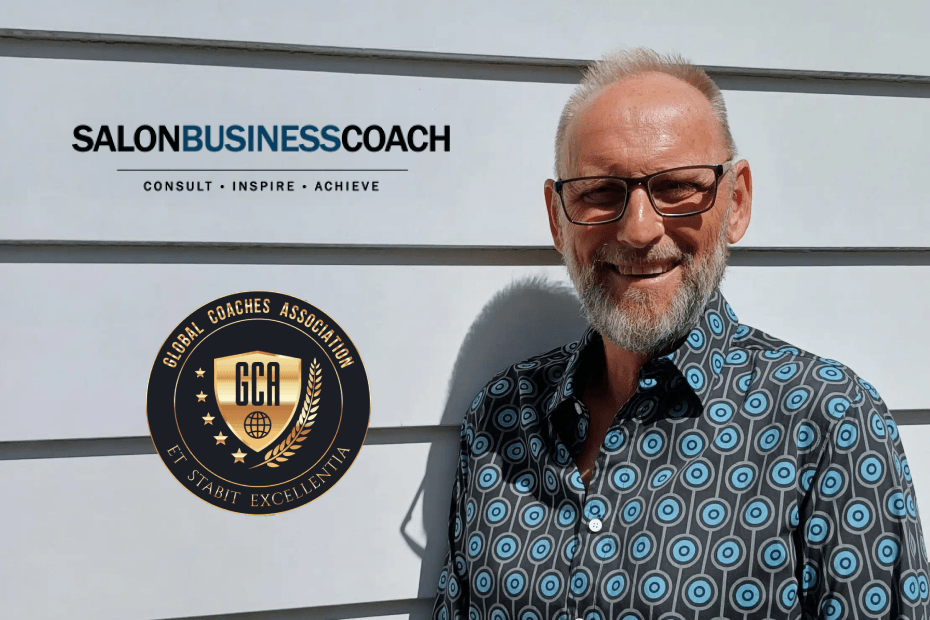
Salon Business Coach reaches its audience through four destinations:
- A Facebook Page
- A Facebook Group
- A personal Facebook profile
- A LinkedIn profile
All four run from one RecurPost schedule, yet only two publish without human involvement. RecurPost sends posts to the Facebook Page and LinkedIn automatically, because Meta’s API permits third-party publishing to both. However, the Group and the personal profile fall outside that permission, which leaves them to a push notification and one tap in the mobile app.
Meta removed publish_actions on August 1, 2018, which ended third-party posting to personal profiles. Meta then deprecated the Groups API on April 22, 2024, further closing Facebook Groups to every scheduler. RecurPost therefore automates what the API allows and hands the rest back to the phone.
Malcolm Gibbons leads the practice and coaches hair, beauty and spa owners across New Zealand and Australia. His audience occupies all four destinations, which turns the publishing split into a daily operating decision. This case study documents the account structure behind it and the workflow that keeps all four current.
| Dimension | Before RecurPost | After RecurPost |
|---|---|---|
| Operation | Salon Business Coach, a New Zealand coaching practice for hair and beauty salon owners, led by Malcolm Gibbons | Unchanged |
| Destinations published to | A Facebook Page, a Facebook Group, a personal Facebook profile and LinkedIn | Unchanged. All four scheduled from one place. |
| Networks involved | Two: Facebook and LinkedIn | Unchanged |
| Facebook Page posts | Posted by hand | Published automatically through Facebook’s API, no step in between |
| LinkedIn posts | Posted by hand | Published automatically through LinkedIn’s official API, no notification and no manual step |
| Facebook Group posts | Posted by hand | Scheduled in RecurPost, published by tapping a phone notification at post time |
| Personal Facebook profile posts | Posted by hand | Same notification workflow as the Group, for the same reason |
| Manual steps per publishing round | Four, one per destination | Two, both taps, both on the phone |
| Where the schedule lives | Nowhere. Posting happened between coaching sessions. | One RecurPost schedule covering all four destinations |
| Life of one post | Written and posted once | Held in a content library and republished on a repeating schedule |
| Posting consistency | Irregular, squeezed between client sessions | Steady, reported by Malcolm Gibbons |
| Audience engagement | Increased, reported by Malcolm Gibbons |
The Account Structure: Three Facebook Surfaces and One LinkedIn Profile
Coaching practice for hair, beauty and spa owners
New Zealand and Australia
As mentioned in the introduction, Salon Business Coach publishes to four destinations across two networks, and three of them are Facebook surfaces. Those three are a public business Page, a private Facebook Group, and Malcolm Gibbons’s personal profile. The fourth destination is his LinkedIn profile. This concentration on Facebook matters, because Meta treats each of its three surfaces as a separate object with separate permissions.
Each surface also serves a different purpose within the practice. The Page carries the public presence of Salon Business Coach. The Group holds the coaching community behind a membership wall. The personal profile reaches Gibbons’s own professional connections, while LinkedIn extends the same material to a wider business audience.
Gibbons publishes for his own practice rather than for client accounts, which shapes the entire workflow. The arrangement removes client approvals, brand-specific tone rules and separate workspaces from the process. It also concentrates the work on one person, since Gibbons writes, schedules and publishes every post while coaching salon, spa and clinic owners across New Zealand and Australia. Before RecurPost, he posted to all four destinations by hand between those coaching sessions.
One RecurPost schedule now governs all four destinations from a single queue. The consolidation matters more here than in a simpler setup, because four destinations previously required four separate logins.
This structure applies to practices whose audience divides between a public Page and a private community on the same network. It does not apply to operations that publish only to business Pages or LinkedIn company pages. Those setups never encounter the constraint examined in the next section.
Why Two Destinations Publish Automatically and Two Require a Tap
Meta closed automatic publishing to Facebook Groups and personal profiles, which splits this practice into two automated destinations and two manual ones. The Facebook Page and the LinkedIn profile publish on their own, because both surfaces remain open to third-party tools through official APIs. The Facebook Group and Gibbons’s personal profile stay closed to every scheduler, including RecurPost.
After Meta removed the publish_actions permission, it ended third-party posting to personal profiles. Meta then deprecated the Facebook Groups API as well, and withdrew the publish_to_groups permission from every API version. Every social media scheduler lost Group publishing on that date, RecurPost included.
RecurPost handles the two closed surfaces through its mobile app instead. The post enters the same schedule as every other post, which keeps one queue for all four destinations. The RecurPost mobile app then sends a push notification at the scheduled time. Gibbons taps the notification, reviews the post, and publishes it within seconds.
The result is a two-and-two split across the working day. RecurPost publishes the Page and LinkedIn posts while Gibbons runs a coaching session. The Group and profile posts wait for the next gap between sessions.
This constraint originates with Meta rather than with RecurPost, which makes it a weak basis for choosing between schedulers. Every tool on the market operates under the same restriction. Any practice expecting fully unattended Group posting will not find it in any product.
The tap load scales directly with Group cadence, because RecurPost sends one notification per Group post. The workflow suits practices that post to their Group a few times each week and keep a phone within reach. It becomes burdensome at three Group posts per day, since each one still requires a manual tap. RecurPost explains the mechanism for all three Facebook surfaces on its Facebook scheduler page.
One Workflow Up Front, Two Publishing Paths at the Scheduled Time
The publishing week runs on a single schedule that divides only at the moment of publication. Malcolm Gibbons writes each post once in the RecurPost composer, selects the destinations, and sets the time. That step remains identical for the Page, the Group, the personal profile and LinkedIn, which removes any need to prepare four versions of the same update.
The division appears only when a scheduled post becomes due. RecurPost sends the Page post and the LinkedIn post through the platform APIs at the set time. The Group post and the profile post wait inside RecurPost until the mobile app can reach Gibbons with a push notification. Both paths therefore begin in the same queue and diverge at the final step.
Weekly output does not depend on writing fresh material each week. RecurPost stores posts in a content library and republishes them on a repeating schedule, which sustains publication through weeks filled with coaching sessions. The remaining publishing workflow features operate the same way across all four destinations, including the content calendar and bulk scheduling.
The arrangement suits a solo operator who accepts responsibility for the taps, or a practice that assigns the mobile app to one team member. It remains a partly manual system rather than a hands-off one. The Group post and the profile post stay pending whenever nobody is available at the scheduled time.

What Malcolm Gibbons Reported, and What He Did Not Measure
Malcolm Gibbons reported steadier posting and stronger community interaction after adopting RecurPost. He published no figures. His starting problem was operational rather than strategic.
“We needed a way to automate our content sharing so we could focus more on our clients and less on managing our social media.” — Malcolm Gibbons, Salon Business Coach
“RecurPost gave us the freedom to focus on what matters most, helping salon owners achieve their dreams.” — Malcolm Gibbons, Salon Business Coach
After the switch, he reported that his followers engaged more regularly and that his hours returned to coaching. However, there are four measurement gaps:
- It records no engagement baseline from the period before the switch.
- It defines no measurement window after it.
- It reports no engagement figure of any kind.
- It does not name the RecurPost plan in use.
RecurPost did not measure this operation independently either. The result therefore stands as one operator’s account of his own practice rather than as a benchmark.
That account remains credible for operations built the same way. Those operations run few accounts, depend on one person, publish at modest volume, and serve a community-heavy audience. The same outcome does not transfer to agencies managing dozens of client accounts at daily cadence.
The contribution of the tool has equally clear boundaries. RecurPost kept a four-destination publishing operation running from one place. It did not grow the coaching practice, win its clients, or build its programs. Those results belong to 30 years of industry experience rather than to a scheduler.
Who This Setup Fits, and Who It Does Not
Your Facebook Group cadence decides whether this setup fits, along with who carries the phone at post time. The type of business matters far less.
Part of your audience sits in a Facebook Group or on a personal profile and the rest sits on surfaces a tool can reach directly. A coach posting to a private Group twice a week spends seconds a week on taps. That is a fair trade for running every destination from one schedule. RecurPost social media management software handles the whole four-destination set from one schedule, which is what makes the two taps worth accepting.
Your Group cadence is high. At several Group posts a day the tap count stops being trivial and turns into a job someone has to be free for.
Skip it too when every destination you publish to is a business Page or a company page. Nothing described here applies to that setup, and a simpler configuration covers it.
One constraint is worth pricing into a retainer. A solo operator with nobody else on the app has no fallback, and when they are unreachable at post time the two constrained destinations do not publish. An agency quoting on a client with a Group in the mix should scope those taps as real work rather than assume the schedule covers them. Other RecurPost case studies document operations with different destination mixes.
Start a Free Trial
RecurPost’s Personal plan covers 5 social accounts for $25 a month, one more than the four destinations this practice runs. The trial runs 14 days and needs no credit card.
5 social accounts, one more than the four destinations Salon Business Coach runs.
No credit card required to start.
Salon Business Coach has not said which plan it subscribes to, so treat that figure as the tier that fits an operation this size rather than the one it bought. See RecurPost pricing plans for every tier and add-on with its unit price, or start a free trial and connect your first accounts.
Common Questions
Which devices can receive RecurPost’s publish notification?
RecurPost sends publish notifications to its iOS and Android apps. Either phone works for the Facebook Group and personal profile posts described above. Scheduling, approving and publishing all run in the same apps.